E-commerce Web Design: Driving Sales for Malaysian Online Stores
An online store is not a brochure site with a cart bolted on. It is a sequence of decisions — find, understand, trust, pay — and the design either shortens that sequence or gets in its way.
This guide sticks to what is documented. Google publishes how product pages describe themselves to Search and how it indexes mobile content. PayNet publishes what its DuitNow rails do for a merchant. W3C publishes the accessibility criteria that govern forms and checkouts. Those documents are enough to make most store design decisions concrete.
What you will not find here is a conversion-rate promise. No published source supports one, so none is made.
Design the buying journey, not the homepage
An online store is judged on one path: find a product, understand it, trust it, pay for it. Everything else is supporting cast.
Start by writing that path down for your best-selling item and your most confusing one, then design against it. Where does the customer land? What does the product page have to answer before they add to cart? How many screens sit between the cart and a completed payment?
Design that path on a phone first. Google documents that it uses the mobile version of a site's content, crawled with the smartphone agent, for indexing and ranking, and publishes the mobile-friendly configurations it supports. A desktop-first store is therefore not only harder to buy from — it is also the version Google is least likely to be looking at.
Make product pages machine-readable
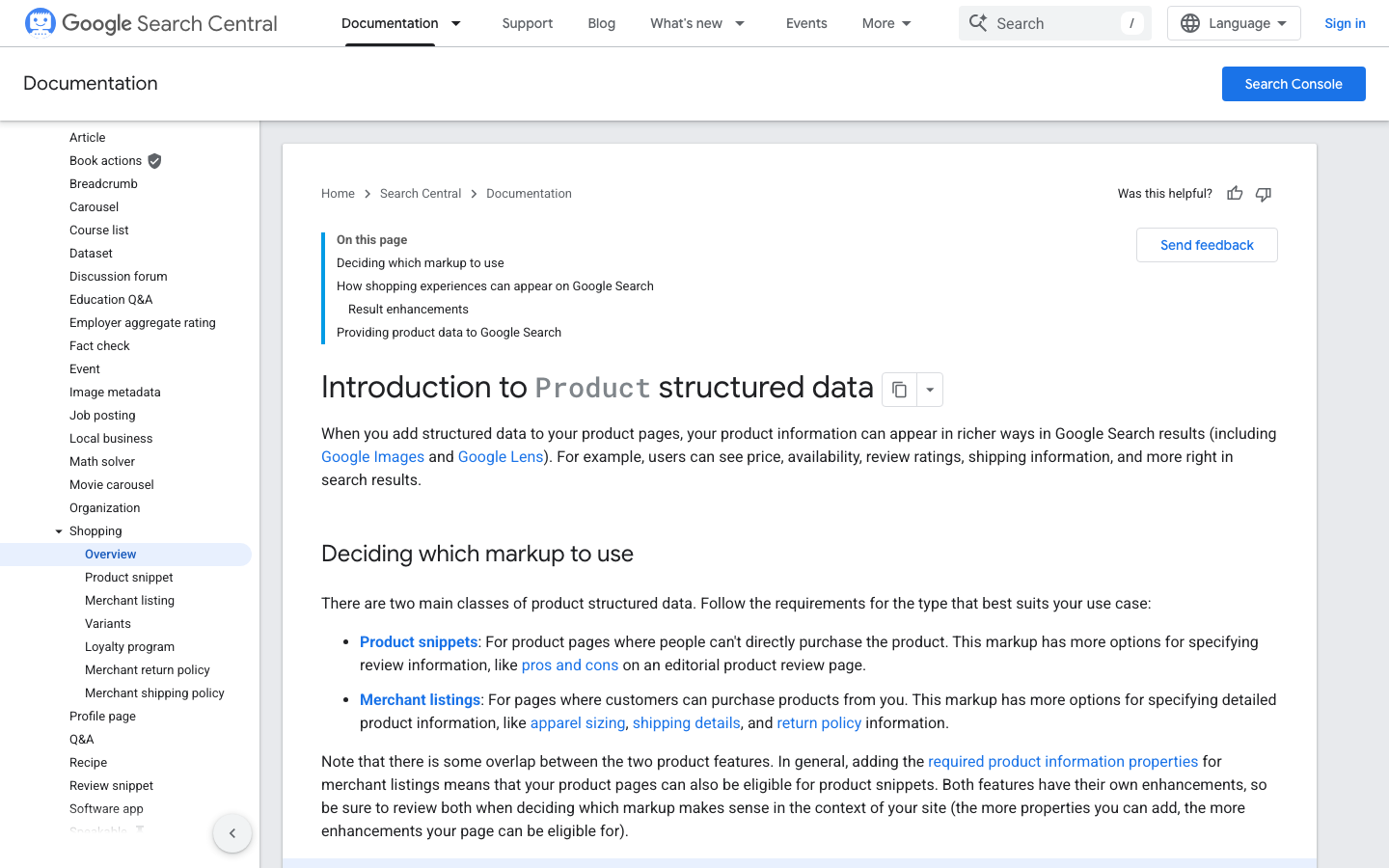
A Malaysian store competes for attention in places other than its own site: search results, Google Images, Google Lens. Product structured data is how a product page describes itself to those surfaces.
Google documents two classes and asks you to choose deliberately. Product snippets are for pages where a customer cannot directly purchase the product — editorial or review pages — and carry more review-oriented options. Merchant listings are for pages where customers can buy from you, and carry more detailed product options such as apparel sizing, shipping details and return policy. Google notes the two overlap: adding the required product information properties for merchant listings can also make the page eligible for product snippets.
The design consequence is concrete. If price, availability, shipping and return information are going to be published as structured data, they must exist as real, maintained fields on the page — not as a graphic, not as a line in a PDF, and not only in the checkout. Decide this before the template is built, because retrofitting product data into a finished layout is the expensive version.
Sources: [1]
Online checkout: banks and eWallets
Payment choice is a design decision, not a plugin decision, because every additional rail is another branch in the checkout that has to be laid out, tested and explained.
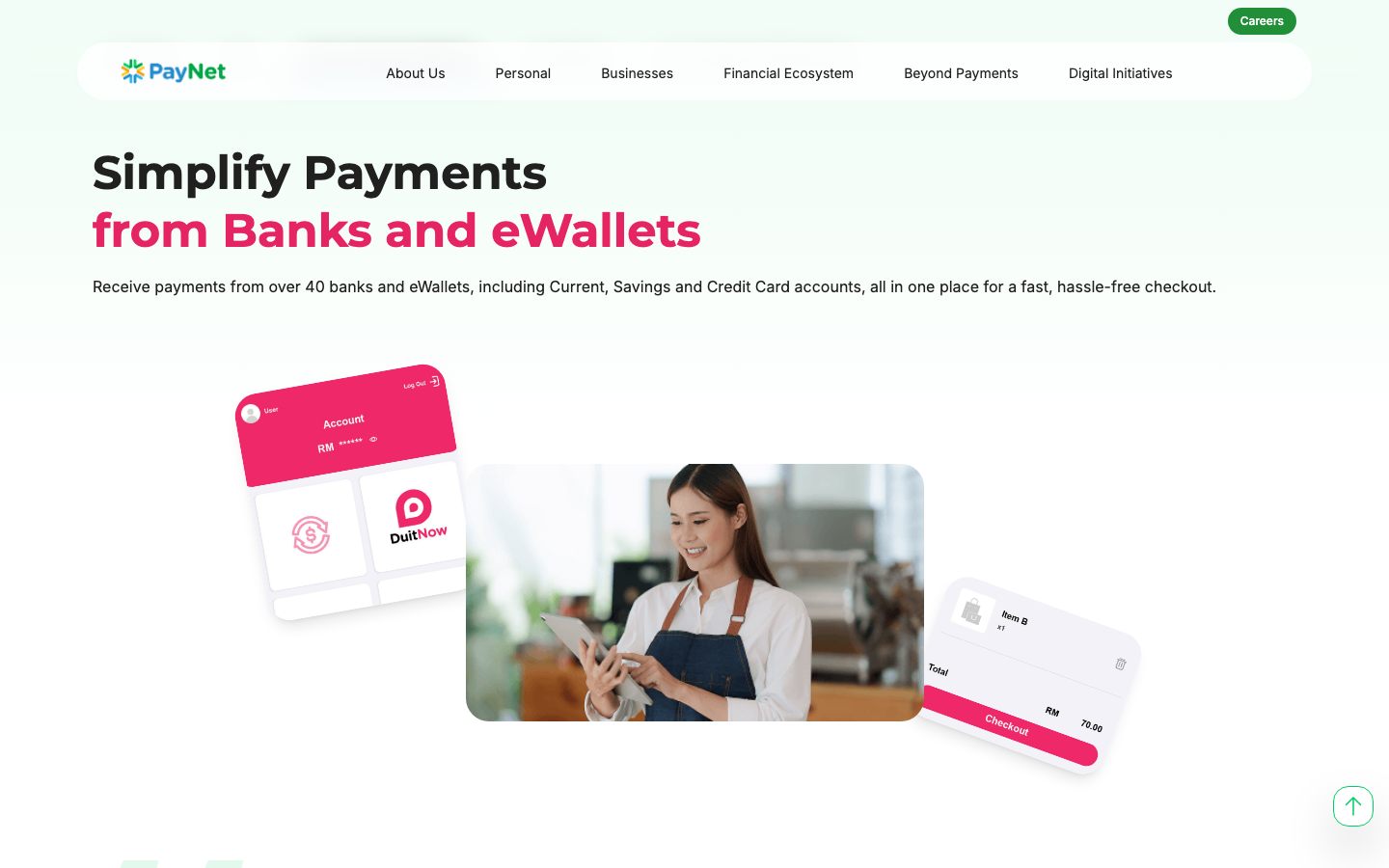
For online payment in Malaysia, PayNet operates DuitNow Online Banking/Wallets, which it describes as letting a business receive payments from over 40 banks and eWallets — including current, savings and credit card accounts — in one checkout. The design implication is that a single well-built payment step can cover a very wide share of Malaysian buyers, so the goal is one clear step rather than a long menu of logos.
Practical rules for that step: show the total including shipping before the customer commits, keep the selected method visible after they choose it, and design the failure state as carefully as the success state. A payment that fails silently is indistinguishable from a store that is broken.
Sources: [2]
Counter and social sales: DuitNow QR
Plenty of Malaysian online stores also sell in a shop, at a market stall, or over a chat thread. Those sales still belong in the same commercial picture, and the website is usually where the customer checks you are real before paying.
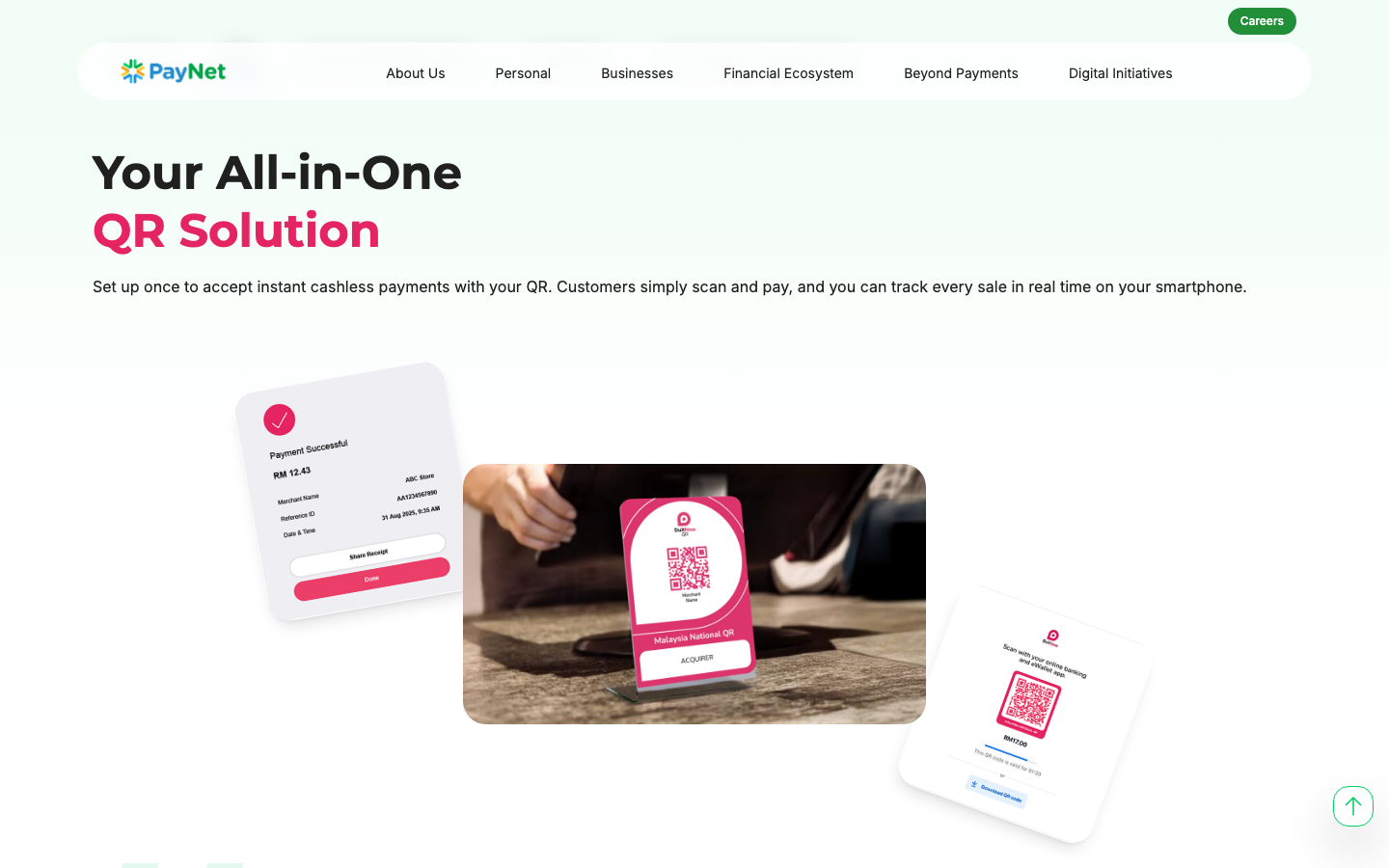
PayNet describes DuitNow QR as a set-up-once arrangement in which customers pay by scanning from any participating bank or eWallet app, with sales trackable in real time. If a meaningful share of your orders is agreed in chat and paid by QR, the site's job changes: it has to carry the catalogue, the proof and the policies that make a QR payment feel safe, rather than pretending every order arrives through the cart.
Design for that honestly. Publish product details, stock status and return terms on the page, and make the contact route obvious, instead of forcing a checkout flow that your customers are not using.
Sources: [3]
Speed and stability are checkout features
Store templates are the heaviest pages most businesses own: image galleries, review widgets, chat bubbles, tracking scripts. Each one competes with the button the customer is trying to press.
Google publishes three measures with good-experience targets you can test on your own store: Largest Contentful Paint within the first 2.5 seconds, Interaction to Next Paint under 200 milliseconds, and a Cumulative Layout Shift score under 0.1. That last one is the checkout killer — a layout that shifts while a customer is reaching for a button is how an order becomes a mis-tap.
Measure the product page, the cart and the checkout separately, on a real phone. A fast homepage tells you nothing about the three pages that actually take money.
Sources: [4]
Accessibility, and what to test before you launch
Checkout is a form, and forms are where accessibility problems turn into abandoned orders. W3C publishes WCAG 2.2 under four principles — perceivable, operable, understandable and robust — which gives you testable criteria for labels, keyboard operation, contrast, focus visibility and error messages rather than a vague instruction to be accessible.
Before launch, run the store against a short list of evidence rather than opinion:
- Complete a real purchase on a phone, on mobile data, from a cold cache.
- Complete the same purchase using only a keyboard.
- Check that product structured data validates for the class you chose, and that its price, availability and shipping fields match the page.
- Measure LCP, INP and CLS on the product, cart and checkout pages.
- Force a payment failure and read what the customer sees.
- Confirm who owns the store admin, payment account, domain and analytics.
If you are still budgeting the build itself, our breakdown of website cost components in Malaysia separates what is publicly published from what is scope.
Store design decisions and the published guidance behind them
| Decision | Published guidance | What it means for the design | How to verify |
|---|---|---|---|
| Which device to design first | Google indexes and ranks the mobile version of content | Build the buying path for a phone, then widen it | Complete a purchase on a real phone on mobile data |
| How product pages are marked up | Product snippets versus merchant listings | Price, availability, shipping and returns must be real page fields | Validate the markup for the class you chose |
| Online payment | DuitNow Online Banking/Wallets reaches over 40 banks and eWallets | One clear payment step beats a long logo menu | Place a live order and force a failure |
| Counter and chat sales | DuitNow QR is set up once and accepts any participating bank or eWallet | The site carries catalogue, proof and policies, not a forced cart | Check the page answers what a QR buyer asks first |
| Checkout performance | LCP 2.5s, INP 200ms, CLS 0.1 good-experience targets | Budget scripts and images against the cart and checkout, not the homepage | Measure product, cart and checkout separately |
| Forms and errors | WCAG 2.2 perceivable, operable, understandable, robust | Labels, focus, contrast and error text are build requirements | Complete a purchase using only a keyboard |
Pre-launch checklist for a Malaysian online store
- The full buying path has been completed on a real phone, on mobile data.
- Product price, availability, shipping and return terms exist as maintained page fields.
- The correct product structured data class has been chosen and validates.
- The checkout covers the payment rails your customers actually use.
- Shipping cost and the order total are visible before the customer commits.
- A failed payment produces a clear, recoverable message.
- LCP, INP and CLS are measured on the product, cart and checkout pages.
- The whole purchase can be completed with a keyboard alone.
- Form labels, focus states, contrast and error messages meet WCAG 2.2 criteria.
- Your business owns the store admin, payment account, domain, analytics and Search Console.
FAQ
Which product markup should a Malaysian store use?
Use merchant listings if customers can buy the product directly from the page, because that class carries the detailed product options such as apparel sizing, shipping details and return policy. Product snippets are intended for pages where the product cannot be purchased directly. Google notes the two overlap, so adding the required product information properties for merchant listings can also make a page eligible for product snippets.
Do I need to support every Malaysian payment method?
Not individually. PayNet describes DuitNow Online Banking/Wallets as letting a business receive payments from over 40 banks and eWallets, including current, savings and credit card accounts, in one checkout — so a single well-designed payment step can cover a wide range of buyers. DuitNow QR, which PayNet describes as set up once and accepted from any participating bank or eWallet, covers counter and chat sales.
How fast does a store checkout need to be?
Google publishes good-experience targets rather than a store-specific rule: Largest Contentful Paint within the first 2.5 seconds, Interaction to Next Paint under 200 milliseconds and a Cumulative Layout Shift score under 0.1. Measure them on the product, cart and checkout pages individually, because those are usually the heaviest templates and the ones that carry the transaction.
Is accessibility relevant to an online shop?
Directly, because a checkout is a form. W3C publishes WCAG 2.2 under four principles — perceivable, operable, understandable and robust — which give testable criteria for labels, keyboard operation, contrast, focus visibility and error messages. The practical test is whether a customer can complete a purchase using only a keyboard.
Key takeaways
- Design the buying path for a phone first — Google indexes and ranks the mobile version of a site's content.
- Product price, availability, shipping and return details must be real page fields before they can be marked up.
- Choose merchant listings markup for pages a customer can buy from, and product snippets for pages they cannot.
- PayNet states DuitNow Online Banking/Wallets reaches over 40 banks and eWallets in one checkout, so one clean payment step beats a long logo menu.
- Measure LCP, INP and CLS on the product, cart and checkout pages, not the homepage.
- Test the whole purchase with a keyboard alone; a checkout is a form and WCAG 2.2 applies to it.
Sources and image provenance
- Introduction to Product structured data — Google Search Central. Checked 1 September 2026 (HTTP 200). Primary source.Evidence used: Google documents two classes of product structured data — product snippets and merchant listings — and states that product information can appear in richer ways in Search results, including Google Images and Google Lens, with price, availability, review ratings and shipping information.
- DuitNow Online Banking/Wallets for Your Business — Payments Network Malaysia (PayNet). Checked 1 September 2026 (HTTP 200). Primary source.Evidence used: PayNet states that its DuitNow Online Banking/Wallets service lets a business receive payments from over 40 banks and eWallets, including current, savings and credit card accounts, in one checkout.
- DuitNow QR for Your Business — Payments Network Malaysia (PayNet). Checked 1 September 2026 (HTTP 200). Primary source.Evidence used: PayNet states that a merchant sets up DuitNow QR once to accept payments from any participating bank or eWallet, with sales trackable in real time.
- Understanding Core Web Vitals and Google search results — Google Search Central. Checked 1 September 2026 (HTTP 200). Primary source.Evidence used: Google publishes the good-experience targets used here: LCP within 2.5 seconds, INP under 200 milliseconds and CLS under 0.1.
- Mobile site and mobile-first indexing best practices — Google Search Central. Checked 1 September 2026 (HTTP 200). Primary source.Evidence used: Google documents that it uses the mobile version of a site's content, crawled with the smartphone agent, for indexing and ranking, and sets out mobile-friendly site configurations.
- WCAG 2 Overview — W3C Web Accessibility Initiative. Checked 1 September 2026 (HTTP 200). Primary source.Evidence used: W3C publishes WCAG 2.2 and its perceivable, operable, understandable and robust principles, which apply directly to forms, checkout steps and error messages.
Image provenance
- Screenshot of developers.google.com captured 1 September 2026 — captured 1 September 2026 via Playwright Chromium screenshot of the resolved source URL at a 1440x900 viewport. Screenshot of a publicly accessible official page, reproduced for citation and commentary; Kreativ Studio claims no ownership of the depicted page, brand or content. Depicted content: Google LLC and its respective rights holders. Review: Screenshot captured and visually inspected by the Kreativ Studio editorial team on 1 September 2026. SHA-256:
d2fbcc1a23b00a029b043c8e9da358c6d707843d3b8e92cee364057c8050e291 - Screenshot of paynet.my captured 1 September 2026 — captured 1 September 2026 via Playwright Chromium screenshot of the resolved source URL at a 1440x900 viewport. Screenshot of a publicly accessible official page, reproduced for citation and commentary; Kreativ Studio claims no ownership of the depicted page, brand or content. Depicted content: Payments Network Malaysia (PayNet) and its respective rights holders. Review: Screenshot captured and visually inspected by the Kreativ Studio editorial team on 1 September 2026. SHA-256:
a0addb7eae8ba562ca6c83b5a2c8aff4596151e57a2521bc9e9399988e7b382a - Screenshot of paynet.my captured 1 September 2026 — captured 1 September 2026 via Playwright Chromium screenshot of the resolved source URL at a 1440x900 viewport. Screenshot of a publicly accessible official page, reproduced for citation and commentary; Kreativ Studio claims no ownership of the depicted page, brand or content. Depicted content: Payments Network Malaysia (PayNet) and its respective rights holders. Review: Screenshot captured and visually inspected by the Kreativ Studio editorial team on 1 September 2026. SHA-256:
59cca59f3f64aca35310cefe3a198b3ff888f5fc02cab01c8160b5e8aea29630
Every claim on this page is attributed to the linked official documentation. No conversion-rate or revenue outcome is claimed, because no cited source supports one.